The Trophy Test: Three Questions Before a UK Consultant Enters an Award
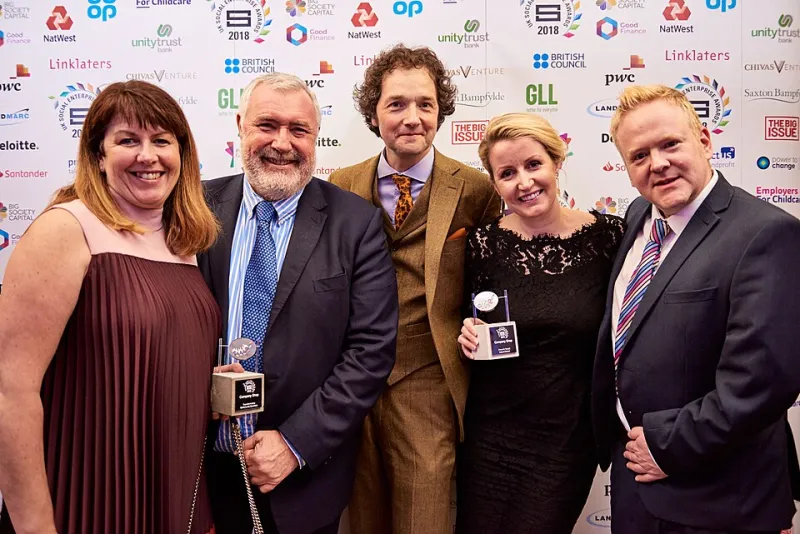
Photo: Social Enterprise UK, CC BY 2.0, via Wikimedia Commons
Every autumn, the inbox fills with award entry deadlines. The categories are flattering, the ceremony is in a nice hotel, and the entry fee is small enough to approve without a second signature. That is exactly why UK consultants should apply a test before saying yes.
Awards are not automatically a waste of money. A shortlist can open a conversation. A win can support a proposal. But the return is rarely as direct as the entry form implies, and the costs are rarely limited to the fee. There is the writing time, the design time, the client approvals, the table, the travel, and the follow-up. There is also the positioning cost: an award can pull a consultant towards work they did not want.
A simple three-question test helps separate the useful from the merely flattering.
Question One: Does the Judging Criteria Describe the Work You Want More Of?
Start with the category, not the ceremony. Read the judging criteria and the previous winners. Ask whether the award rewards the kind of work you are trying to build. A consultant who wants long-term retained advisory work should be cautious about an award for fastest-growing project business. A consultant who wants public-sector work should look closely at who sponsors the award and who sits on the panel.
There is a subtler test: would you be comfortable being grouped with the other winners? Awards create associations. If the category attracts businesses whose model you would not recommend to a client, the trophy may do more harm than good.
If the criteria describe a version of your practice you are trying to leave behind, decline. A win in the wrong category is a positioning problem disguised as a marketing result.
Question Two: Can You Evidence the Entry Without Borrowing Risk From a Client?
Awards often ask for client results, testimonials, financial figures, or a detailed story. That is where the hidden cost appears. If you have to chase a client for a quote in the final week, or disclose figures that their communications team has not approved, the entry is borrowing risk from the relationship.
Ask whether you can tell the story with proof you already have. An approved anonymised case study is often enough. If the entry depends on a client who is difficult to reach, or on details that would make a procurement team uncomfortable, the answer should be no. The award is not worth damaging a working relationship for.
Question Three: What Is the Full Cost Per Credible Outcome?
Add up the entry fee, the writing time, the design time, the table, the travel, and the follow-up. Then divide by a realistic estimate of the outcome. A shortlist is not a win. A win is not a pipeline. Be honest about the probability and about the value of the result.
A useful rule is to ask whether you would pay the same total sum for a line on your website and a paragraph in a proposal. If the answer is yes, the award may be a reasonable marketing expense. If the answer is no, the ceremony is probably being funded by optimism.
Track what happens after the result. If shortlisted or winning entries produce no enquiries, no improved conversations, and no change in the quality of briefs, the award is a decoration rather than a business development tool.
Using a Shortlist or Win Without Distorting Your Positioning
If you do enter and you are shortlisted or win, use the result precisely. 'Shortlisted for the 2026 Regional Consultancy Awards' is stronger than 'award-winning consultant'. The first is a fact. The second is a category error waiting to happen.
Mention it once in the relevant place: a proposal cover note, a biography, a website page. Do not put the trophy in your logo or let the award become the first thing a buyer learns about you. The work should still lead.
Thank the client if their work formed part of the entry, but do not turn them into a promotional asset without permission. If you lose, do not mention it. Buyers are not interested in the awards you did not win.
The Decision Rule
If the answer to all three questions is yes, enter. If two are yes, consider it carefully and keep the entry short. If one or none is yes, decline and spend the time on a proposal, a case study, or a conversation with a past client.
The trophy is not the point. The point is whether the entry forces you to describe your work clearly and whether the result reinforces the position you want. If it does, the award can earn its keep. If it only adds a logo, leave it on the shelf.