Reading the Polite Pause: Five Phrases That Tell a UK Buyer Is Drifting

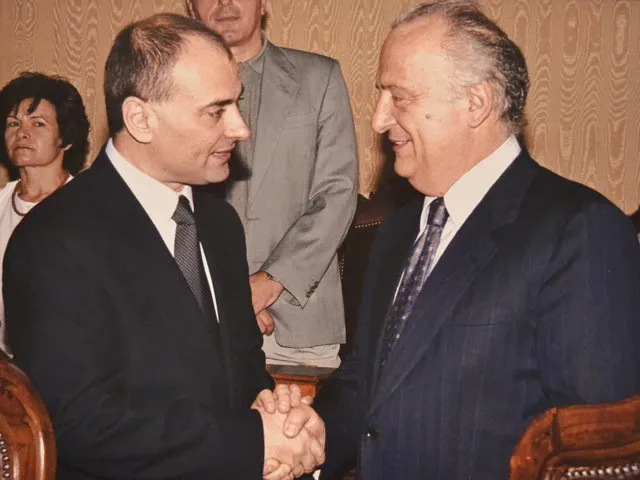
Photo: Barry Goyette from San Luis Obispo, USA, CC BY 2.0, via Wikimedia Commons
There is a particular kind of silence in British commercial life. It is not hostile and it is not empty. It arrives with an apology attached, usually by email, usually on a Friday, and it sounds like cooperation. “Leave it with us.” “We’re just waiting on one more person.” “Could you send that across again?”
Each of these is polite, and each is a signal. The difficulty is that the politeness and the signal point in opposite directions, and a consultant reading only the politeness will keep sending the same document and wondering why the decision never comes.
The field guide below is not a set of tricks. It is a way of hearing what is actually being said, and of responding in a manner that gives the buyer an easier route to a decision — including, sometimes, an easier route to a clear no.
1. “Leave it with us.”
What it usually means: the decision has stalled inside the organisation, or the person speaking is not the person deciding. It can also mean the buyer is being kind: they have already concluded that this is not going ahead and would rather not say so directly.
A calm response: treat the phrase as the start of a timetable rather than the end of a conversation. “Of course. Would it help if I came back to you on the 3rd, or is there a date after your planning meeting that suits better?” A named date converts an open-ended holding phrase into something with an edge to it, without pressure.
It is also worth asking, once, what the item needs in order to move: “Is there anything you would need from me to help it along?” The answer is often the first honest sentence in the exchange.
2. “We’re just waiting on one more person.”
What it usually means: sign-off now sits above your sponsor, or a colleague has raised an objection that has not been relayed to you. Occasionally it means nothing at all and is simply a way of buying a week.
A calm response: ask what that person will want to see. Not “can I speak to them?” — that reads as an attempt to go around your contact — but “what would be most useful for them to have in front of them?” Offer a single page written for that reader: the problem, the decision required, the cost of delay. A summary designed for the person you have never met is often the most valuable document in the whole process.
3. “Could you send that across again?”
What it usually means: the document is lost, or the person who held it has changed role, or the request is a soft postponement dressed as an administrative hiccup.
A calm response: send it, and make the resend do some work. A short covering note with three lines — what the document decides, the date by which a decision helps, and an offer to walk through it in fifteen minutes — costs almost nothing and gives the buyer a reason to reopen it. Re-sending the same file with the same covering line as last time tells the buyer that nothing has changed, including your expectation of an answer.
4. “It’s with procurement now.”
What it usually means: either a genuine stage in the process or a shelter. Both are common, and from the outside they look identical.
A calm response: stay useful without becoming a nuisance. Ask for the name of the person handling it and whether there is anything they typically require — a supplier form, an insurance certificate, a reference. Consultants who make procurement’s job easier tend to be the ones whose files move. This is also the point at which a stalled internal sponsor often reveals themselves: if nobody can tell you who in procurement holds the file, the file is probably not there yet.
5. “Let’s pick this up in the new year.”
What it usually means: genuine capacity has run out, or the buyer is engineering a graceful exit that involves no refusal at all.
A calm response: accept warmly, and leave something behind. A one-page summary of the decision as it stood, a note of what would need to change for it to become live again, and a booked date in the diary for a short call in the second half of January. A deferral with a date attached behaves very differently from a deferral without one. If the interest is real, the date is a convenience; if it is not, the date will quietly confirm that.
The thread that runs through all five
Every one of these phrases is doing the same work: protecting the relationship from the awkwardness of a direct refusal. In a culture that treats a plain no as a small social failure, the consultant who makes a no easy to give is performing a service, not conceding a point.
That is why the useful question is rarely “have you had a chance to look at the proposal?” It is closer to: “Is anything standing in the way that I could help with?” It invites the objection rather than the update, and objections are the only material a decision can actually be built from.
There is one further discipline. Each response should change the shape of the conversation rather than repeat it. Another follow-up email that restates the same proposal teaches the buyer that nothing happens when they stay quiet. A short note with a new date, a new reader in mind, or a new question teaches them the opposite — that this is a process with a rhythm, and that a decision, in either direction, will be received well.